Welcome
Welcome to our blog ;)
This beautiful blog is set up by: Elswyth, Jolene and Pei Qin.
Together we are save-nemo.
Hope you would like our blog and help save the corals.
I WAS HERE @ 10:23 AM l
0Comment
marine life?
 Konichiwa!
Coral reefs? Marine life? we may have a strong interest about marine sea creatures,but in singapore we hardly chances of being up close and personal to the marine life.Hence, this project would help us have a better understanding about coral reefs, about marine life and how we can do our part to save them. By doing simple things in our lives. (:
save the earth,save the marine life
 peiqin(:
23 august 2008
11:35pm
I WAS HERE @ 11:35 PM l
0Comment
elswyth
hello!

here's a big fishy kiss to everyone out there;)
elswyth's my name and together peiqin and jolene will be running this little blog with me:D
so,we have started this blog,mainly because of our passion for marine creatures,marine life,the sea,fishes,jellyfishes,basically everything under the sea (and above the sea as well?)
you know,when i was little i always dreamed of being a marine biologist when i grow up(yes,even up till now.)but the thing is i can't swim so that's why i've decided to set up this blog to inspire you guys out there to help protect the oceans!(say,yay!)
stay tuned for more updates by my friends and prepare to be enthralled by our little findings about anything to do with the sea:)
love,elswyth.jpg)
p.s.(i promise i'll get a proper picture the next time round)
23 august 2008
10:10pm
I WAS HERE @ 10:10 PM l
0Comment
jolene's first post
 Hey there people,
yes im Jolene and im the last person in my team to type an introductory post ;(
but all that i can say is.. keep the last for the best ;DD
anyways here are somethings about myself:
- i enjoy swimming.
- i had gone overseas to see marine life through snorkeling (mostly Malaysia).
- i am fastinated by the wonders and beauties that mother nature has in stored have for us.
It is quite dishearten that Singapore's beaches has very little coral life. Thus, the only place nearest to Singapore with much coral life, is our neighbouring countries, Malaysia and Indonesia.
One of the places i have been to see marine life is Tioman , Malaysia. [recommended by me! a must go!]
Here is a map of where Tioman island is located.
Credits
As you can see from the picture, Tioman Island is at the east of mainland Malaysia.
Tioman Island is a beautiful place to not only enjoy the scenery and also, to relax in the presence of mother nature.
The following are pictures that are taken by my family and I.
***

The beautiful resort where my family and i stayed during our vacation in Tioman.
***

The beach (around 7:30pm), my brother and i
***
the fishes underwater
(i fed them bread)
***
my brother and i, as you can see, the water is crystal clear.
***
that is all there is, and stay tune for my next post ;DD [thank you IYOR for helping to save the reefs around the planet ;D and the efforts made by Underwater world to create awareness about protecting the marine life]
24 august 2007
10:05pm
I WAS HERE @ 10:05 PM l
0Comment
facts
 Do you know?
corals are found both in temperate and tropical waters, shallow-water reefs are formed only in a zone extending at most from 30°N to 30°S of the equator. Tropical corals do not grow at depths of over 50 m (165 ft). Temperature has less of an effect on the distribution of tropical coral, but it is generally accepted that they do not exist in waters below 18 °C. However, deep water corals can exist at greater depths and colder temperatures. and did you know?
Coral reefs can take a variety of forms, defined in following:
Fringing reef – a reef that is directly attached to a shore or borders it with an intervening shallow channel or lagoon.
Barrier reef – a reef separated from a mainland or island shore by a deep lagoon
Patch reef – an isolated, often circular reef, usually within a lagoon or embaymt.
Apron reef – a short reef resembling a fringing reef, but more sloped; extending out and downward from a point or peninsular shore.
Bank reef – a linear or semi-circular in outline, larger than a patch reef.
Ribbon reef – a long, narrow, somewhat winding reef, usually associated with an atoll lagoon.
Atoll reef – a more or less circular or continuous barrier reef extending all the way around a lagoon without a central island.
Table reef – an isolated reef, approaching an atoll type, but without a lagoon.
save the coral reefs!!
 peiqin(:
26 august 2008
10:14pm
I WAS HERE @ 9:49 PM l
0Comment
artifical reefs and other corals
Good evening!
Today I would be posting about all about "Biorock", also known as Electric Reefs.
What is Biorock? Biorock is a process where electrically-conductive frame is constructed by using reinforcement steel is anchored to the sea bed. Then, a low voltage current os then applied by a generator through an anode mesh composed of titanum. In time, corrosion would occur. A white film of limestone is being created due to mineral accretion. This material is a composite of limestone and brucite, similar to the composition of natural coral reefs. The layer of film becomes thicker and thicker, then being encrusted with the precipitated minerals as the electricity is turned on. (adapted from Asian geographic)
So after some time, you would see corals growing on this metal cages!! Amazing!!The following are pictures of Biorocks that i found on the internet. Enjoy ;)
[thank you google]
For more information, I had found some good websites and videos where you might want to check it out ;D
Global Coral
Biorock
Click the above link ;)Unfortunately, my computer/blogger doesn't allow me to post the video on this blog post, something wrong with the html :(
please click on the following link, Diving Structure
-sorry for any inconvenience caused.
Reflections: Did you know that the corals in our ocean are dying at a quick rate? Thus, I feel that it is a fantastic idea to plant biorocks to provide homes to marine life like, nemo and his friends [clown fish, etc]. In addition, it promotes the growth of corals ;DD Though it may take a few years to increase the population of the coral reef, it is better than nothing.
Other information from wikipedia
The Biorock Process or mineral accretion is a technology used to grow structures and marine ecosystems in seawater. It provides a cost-effective and sustainable method to accelerate coral growth and increase coral survival particularly in areas where environmental stress has affected existing reefs. Biorock methods can help restore damaged coral reefs and provide building materials from sustainable energy resources for mariculture of corals, oysters, clams, lobsters and fish. When mixed with aggregates, accreted minerals can be used as building components on the sea bottom or on land. Biorock structures can be built in any size or shape depending only on the physical makeup of the sea bottom, wave and current energies and construction materials. They are well suited for remote, third world sites where exotic building materials, construction equipment and highly skilled labor are non-existent.[http://en.wikipedia.org/wiki/Biorock]
****

Staghorn Coral
(Acropora cervicornis)
Staghorn Coral lives in quiet water. Staghorn coral is a branching coral with cylindrical branches ranging from a few centimeters to over 6.5 feet (2 m) in length. It grows five to six inches every year. It provides shelter for the rest of the coral reefs. Staghorn Coral looks a lot like antlers.
****
Finger Coral
(Porites compressa)
Another coral is Finger Coral. It has large pores, grows in thick colonies, and has branches which are swollen at the tips. It is distinctly gray. It is light-brown to yellowish in color. Finger coral's structure has calices that flush with the surface. The upper septa surface looks like elevated rods. This species can be found in wave protected areas, 0-50 meters from shore. It is known as pohaku puna to Hawaiians.
 This post is brought to you
by your one and only
Jolene ;DD
26 august 2008
10:17pm
I WAS HERE @ 9:48 PM l
0Comment
elkhorn coral
Hey guys, guess what's today's coral of the day is(drum roll)
:
:
:
THE ELKHORN CORAL !!

ScleractiniaFamily: AcroporidaeGenus: AcroporaSpecies: palmata
Species DescriptionElkhorn coral is a large, branching coral with thick and sturdy antler-like branches.
The dominant mode of reproduction for elkhorn coral is asexual, with new colonies forming when branches break off of a colony and reattach to the substrate. Sexual reproduction occurs via broadcast spawning of gametes into the water column once each year in August or September. Individual colonies are both male and female (simultaneous hermaphrodites) and will typically release millions of "gametes".
The coral larvae (planula) live in the plankton for several days until finding a suitable area to settle, but very few larvae survive to settle and metamorphose into new colonies. The preponderance of asexual reproduction in this species raises the possibility that genetic diversity may be very low in the remnant populations.


Smaller fragments of broken coral were buried in the constantly shifting rubble on the sea floor, diminishing their chances of survival.
Elkhorn coral (Acropora palmata) is no stranger to storms and rough weather. This coral thrives in the turbulent conditions of the shallow reef crest and is well adapted to this type of environment.

The massive waves generated by the storm pounded this section of the reef, breaking loose and tossing about large fragments of Elkhorn coral.

sorry,this picture is just so beautiful that i had to put it up.:)
did you know?
Coral reefs are home to more kinds of life than any other marine environment, rivalling even the tropical rainforests on land. In fact, coral reefs reached their current level of biodiversity fifty million years ago and have been on the planet for over 400 million years...
hmm, if only corals had eyes, maybe sea-dinosaurs existed the past 400 million
stay tune for the next post as i'll be posting creatures from the deeps sea...(wooooo,scary)
that was the reason why i said there might be sea-dinosaurs because the deep sea creatures look so....
hehe,i won't spill the beans right now:D
whoops ,i gonna be late for school of i don't get ready now.
bye!remember STC!
(STC- it means save the corals my dear:)
love,elswyth.jpg) 27 august 2008
27 august 2008
6:52am
I WAS HERE @ 9:45 PM l
0Comment
say NO!
our beautiful ocean is in danger!!
Yes, one of these reasons are due to dynamite fishing (blast fishing).
What is blast fishing?
It is the use of explosives to stun/kill schools of fish for easy collection. (it is illegal)
So why is dynamite fishing banned?
The explosion made that is used to stun/kill schools of fish results in destroying coral reefs and killing other marine creatures.
This destroys the physical environment and caused severe damage to coral reefs. Not to mention, marine creatures.
The following are pictures of dynamite fishing.
Credits goes out to all who took these two pictures.
 I had also found a video about promoting awareness about the declining Coral reefs. You may click the following link >> http://www.youtube.com/watch?v=4-gLJF8bALU [Find out more about how you can save the corals by joining organisations like IYOR]

Thank you for reading my post ;)
Please do your part and spread awareness
about the destruction blasting fishing does.
Thanks,
Jolene
[P.S. was unable to find a suitable video about dynamite fishing- im sorry]
28 august 2008
6:42pm
I WAS HERE @ 9:40 PM l
0Comment
ways to save them!
Hello!
i have just found a website on how you can save coral reefs
http://www.yoto98.noaa.gov/books/reefs/reef1.htm
wow.sciencist are saving coral reefs all around the world..
http://www.nova.edu/ocean/coralnursery.html
and there are organisation around the world, who are also saving these poor coral reefs.
http://www.nature.org/joinanddonate/rescuereef/marine/
People around the world are saving them, are you?
Spread the message around the world.((:
 peiqin
30 august 2008
9:16pm
I WAS HERE @ 9:25 PM l
0Comment
Additional Links
Just read this article online about the declining Coral population and why is it happening as we speak. You may click the following link, http://www.magazine.noaa.gov/stories/mag7.htm
Here is yet another website i had just found about 25 ways you may do to save the coral reef :)
This website also acknowledges the International Year of the Coral Reef (IYOR), response to the growing threats to coral reefs around the world. In addition, it talks about governments from around the world are playing their part. Feel free to click on the following link, http://www.publicaffairs.noaa.gov/25list.html
 Thanks for reading my post ;)
I hope you may visit the above links.
May you continue to play your part in saving the coral reefs :)
All the Best,
Jolene
31 august 2008
1:47pm
I WAS HERE @ 9:00 PM l
0Comment
what is IYOR?
 You might be thinking what is IYOR? Well, IYOR stands for International Year of Reef.
History of IYOR...
The year 1997 was declared the International Year of the Reef (IYOR). The first IYOR campaign was to initiate response to the increasing threats [like over fishing etc] and loss of coral reefs and associated ecosystems, like mangroves and sea grasses. IYOR 97 was a global effort to increase awareness and understanding of coral reefs, and support conservation, research and management efforts. IYOR 97 was proved to be very successful, with over 225 organizations in 50 countries and territories participating, over 700 articles in papers and magazines generated, hundreds of scientific surveys undertaken, and catalysed conservation and policy initiatives, as well as numerous local and global organizations dedicated to coral reef conservation. (Adapted from http://www.iyor.org/about/)
Since this year is the year 2008. Thus, it is named IYOR2008.
You may visit the IYOR website by just clicking on the image above to find out more about IYOR. Plus, there are other relevant information and events about Coral Reefs. [You may obtain the html code for the log, when clicked, visitors would be linked to IYOR homepage, from this website http://www.iyor.org/resources/logo.asp - P.S you may want to put it on your blog ;DD]
Additional information: IYOR is the main organiser of the YMBA 2008 BEST IYOR Blog Contest.
Hope you may visit IYOR website
and support their route to STC (saving the corals -from elswyth)
[P.S. there are other organisations out there, who are also saving the corals]
Love,
Jolene ;DD
31 august 2008
10:18pm
I WAS HERE @ 8:50 PM l
0Comment
Beach Cleaning
We went to east coast today (1st september) with some other classmates to pick up litter. We had to take the mrt then a bus to get there. Common litter that we found were cigarette butts, plastic bags, styrofoam cup/plates, newspaper, fragment of glass, and cans. Did you know that when the tide comes in, all of this litter would be swept into the sea, polluting the ocean?
There were many recreational activities going on at that time, yachting, building sand castles. The following are pictures that we took during our beach cleaning session :) enjoy
Sand Castle building
(do not leave your buckets behind!!)
The beautiful scenery

Having fun while picking up litter
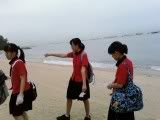
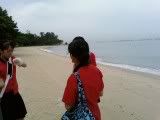
discussing which side of the beach we should pick up litter first :)
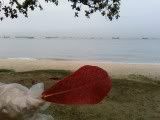
a leaf!

Please do not dirty the beach. It serves as a relaxing place to us humans in the day. While a home to marine life at night. Please do your part and keep the beach clean. We would like to thank all the classmates who went with us for beach cleaning. We hope to clean the beach again or check out places with many marine creatures in Singapore, for example, Chek Jawa.
[we might also want to join in the IYOR activities to conserve corals too ;DD]


With lots of love,
Pei Qin, Elswyth and Jolene.
1 september 2008
9:16pm
I WAS HERE @ 8:45 PM l
0Comment
Movies
Yes you heard me correct, movies ;DD
here are some movies that i recommend you guys to watch :)
first up is,
(drum roll....)
FINDING NEMO
 So... What is Finding Nemo?
Finding Nemo, is a heart warming story about a father clown fish, Marlin, trying to find his lost son, Nemo.
As nemo was caught by a diver and taken away from his father by force. Thus, Marlin sets out on his journey in search of Nemo. This movie was out in 2003, hitting box office by storm. If you haven't watched this movie, you have no idea how much you are missing out. So go to your nearest video shop and rent/buy a Finding Nemo VCD/DVD now to watch it. Guarantee satisfaction.
Next up on our list is ...
(Drum roll....)
Shark Water
 This movie was meant to alert humans about the shark population that is declining drastically. This movie was being set in a realistic way, which puts the viewers in the show.
Shark Water is one movie that is a must watch :)

[psst.... you can donate $ to IYOR funds ;DD help them save the corals!]

This is a post by yours truly,
Jolene :)
continue to STC (save the corals -by elswyth)
1 september 2008
10:24pm
I WAS HERE @ 8:05 PM l
0Comment
10 Horrible Deep Sea Creatures
So you have heard so many names of the deep sea creatures in the last two videos, still sound like greek to you? here is some background info...;)
10 Horrible Deep Sea Creatures
- Viper fish

Viper fish (Mesopelagic - found at 80-1600 meters - about a mile down) are some of the most wicked looking fish dredged up from the depths. Some of them are black as night all over with light organs (called photophores) in strategic places on their bodies, including one on a long dorsal fin that serves as a lure for the fish it preys upon. Some viperfish (and many other deep ocean fish species) don't have any pigment (color) at all - they're "see through". They also have enlarged eyes, presumably for gathering as much light as possible where there is little or no light at all. The light organs create lights by using a chemical process called bioluminescence. They also have large stomachs which can stretch to accommodate a fish much larger than itself. The gulper eel is particularly well-known for its impossibly large mouth - big enough to get its mouth around (and swallow!) creatures much bigger than itself. Fish that live down here must adapt to a very low food supply, eating only "scraps" that sink down from above, or sometimes eating each other. 
- Fangtooth

The fangtooth, aslo known as Anoplogaster cornuta, is a menacing looking creature that inhabits the deep waters of the ocean. Although it may look like a monster, it only grows to a size of about six inches in length. It has a short body and a large head. The fangtooth gets its name from the long, sharp, fang-like teeth that line its enormous, over-sized mouth. Its gruesome appearance has earned it the name, "ogrefish". The color of the adults ranges from dark brown to black. The fangtooth is an extreme deep-water species that lives at depths of about 16,000 feet. The pressure at these depths is intense and the water temperature is near freezing.
- Dragonfish

The deep sea dragonfish, or Grammatostomias flagellibarba, is a ferocious predator in spite of its small size. It is one of many species known to inhabit the deep oceans of the world. This fish grows to about six inches in length. It has a large head and mouth equipped with many sharp, fang-like teeth. The dragonfish has a long barbel attached to its chin. This barbel is tipped with a light-producing organ known as a photophore. The dragonfish uses this organ like a fishing lure, flashing it on and off and waving it back and forth. Once an unsuspecting fish gets too close, it is snapped up in the dragonfish's powerful jaws. The dragonfish also has photophores along the sides of its body. These light organs may be used to signal other dragonfish during mating. They may also serve to attract and disorient prey fishes from deep below. Dragonfishes live in deep ocean waters at depths of up to 5000 feet (1,500 meters). They are found in most tropical regions around the world. 
- Angler
 The deep sea angler, known also as Melanocetus johnsoni, is a grotesque-looking fish that lives in the extreme depths of the ocean. Its round body resembles a basketball, and indeed, it looks like it could easily swallow one. It has a large mouth likes with sharp, fang-like teeth. Its appearance has earned it a second name of "common black devil". Despite its ferocious appearance, the angler only reaches a maximum length of about five inches. The angler gets its name from the long, modified dorsal spine which is tipped with a light producing organ known as a photophore. Like many other deep-water fish, the angler uses this organ like a lure to attract its prey. It will flash its light on and off while waving it back and forth like a fishing pole. When the prey fish gets close enough, the angler snaps it up with its powerful jaws. A strange fact about the deep sea angler is the fact that the male is smaller and different in appearance from the female, which is a picture above. The male of the species is about the size of a finger and has small hook teeth, which it uses to attach itself to the female. Once attached, its blood vessels join with that of the female and it will spend the rest of its life joined to her like a parasite, getting all of its nourishment from her body. If the male is unable to attach to a female, it will eventually die of starvation. The deep sea angler is found throughout the world at depths of over 3000 feet.
- Gulper Eel

The gulper eel, known scientifically as Eurypharynx pelecanoides, is perhaps one of the most bizarre looking creatures in the deep ocean. Its most notable attribute is the large mouth. The eel's mouth is loosely hinged, and can be opened wide enough to swallow an animal much larger than itself. The hapless fish is then deposited into a pouch-like lower jaw. The gulper's stomach can also stretch to accommodate its large meals. The eel also has a very long, whip-like tail.
- Giant Squid

The elusive giant squid,is one of the world's largest animals, reaching a length of up to 60 feet. It is the largest known invertebrate in the world. The giant squid is a mollusk and is member of the cephalopod class, which includes the octopus and other squids. Very little is known about these mysterious animals because none have been seen alive in the wild. Most of what we know about them comes from the bodies of dead squid that have washed ashore or been pulled up in fishermen's nets. These animals are carnivores, and will eat just about anything they can catch. During World War II, stories from the survivors of sunken ships tell of shipmates being eaten by these creatures in the dark of night. There have even been reports of giant squid reaching out of the water and pulling men off small boats. None of these reports have been officially verified, but they paint a picture of a powerful predator. The squid's eight long tentacles have strong suction cups, which they use to hold on to their prey. A sharp, powerful beak finishes off their helpless victim with eerie efficiency.
- Giant Isopod

The giant isopod, known scientifically as Bathynomus giganteus, is the largest known member of the isopod family. It is very closely related to the small pillbugs that you can find in the garden. It is a carnivorous crustacean that spends its time scavenging the deep ocean floor. Giant isopods are known to reach a size of over 16 inches in length and are one of the largest members of the crustacean family. When threatened, the can roll themselves into a tight ball where they are protected by their strong, armor-plated shells. 
- Coffinfish

The coffinfish (B.melanostomus) has a flabby body and long tail that are both covered with small spines. It has a black mouth lining and an illicium (glossary) on the snout that can be lowered into a groove. This species grows to at least 10cm in length. The name melanostomus comes from the Greek melanos meaning black and stoma meaning mouth.
- Vampire squid

The vampire squid, looks more like something that swam out of a late-night science fiction movie. It is very gelatinous in form, resembling a jellyfish more than the common squid. The vampire squid has the largest eyes of any animal. It is a small animal, growing to a length of about six inches, bit it has globular eyeballs as large as the eyes of a large dog. The vampire squid's body is covered with light-producing organs called photophores. This gives the squid the unique ability to "turn itself on or off" at will. When the photophores are off, the squid is completely invisible in the dark waters where it lives. These squid live as deep as 3000 feet. Unlike other squid and octopi, the vampire squid has no ink sack. The vampire squid's arms are covered with sharp tooth-like spikes. The squid may use these arms to capture its prey. When threatened, the squid can draw its arms up over itself and form a defensive web that covers its body. The vampire squid can swim extremely fast for a gelatinous animal. It can reach a speed of 2 body lengths per second and can accelerate to this speed in only 5 seconds.
- Long-nosed Chimaera

Biologists have gone to great lengths to describe the long-nosed chimaera, Harriotta raleighana, whose kind can reach five feet in length. Its stiletto-like nose reminded one of "the nose contour of a supersonic jet aircraft.". A touch of the venomous spine on the first dorsal fin can kill a person, though such a fate is unlikely given the 8,000-foot depths at which this creature lives.
Also, do go to this website http://www.seasky.org/deep-sea/hatchetfish.html. It’s really cool. You'll get to know everything about deep sea creatures! i have to say, visiting that site made me felt like a virtual deep-sea diver for a moment ;X
yeah, weird i know. :D
go check it out!
-love,elswyth .jpg)
2 september 2008
12:56AM
I WAS HERE @ 5:25 PM l
0Comment

 Hello,welcome readers.



.jpg)


.jpg)
.jpg)


.jpg)


.jpg)